From Google Sheets to a warehouse that keeps up

Warehouse platform for a growing distribution network.

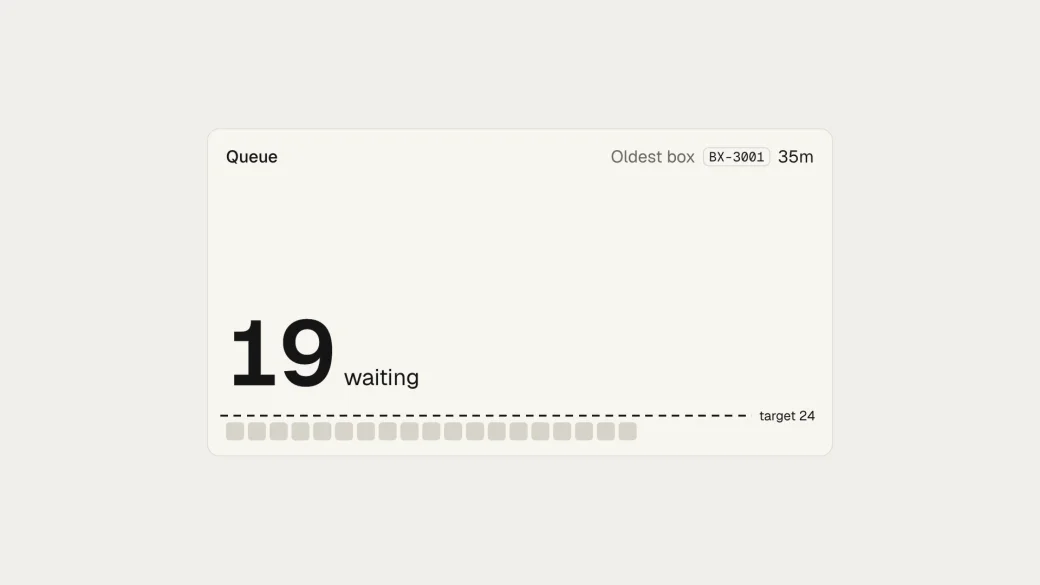
The Queue card on the manager's dashboard: 19 boxes waiting, all under the dashed target line.

Piles on the floor

Three warehouses ran on Google Sheets. Boxes piled up on the floor, and the backlog grew every day.
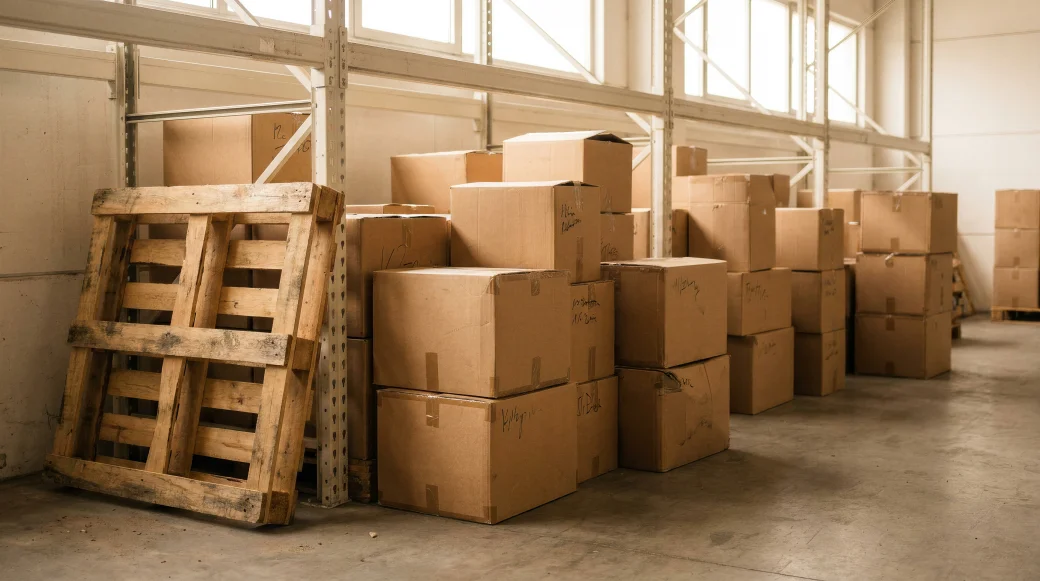
Cardboard boxes stacked along a warehouse wall, a wooden pallet leaning against the racking.
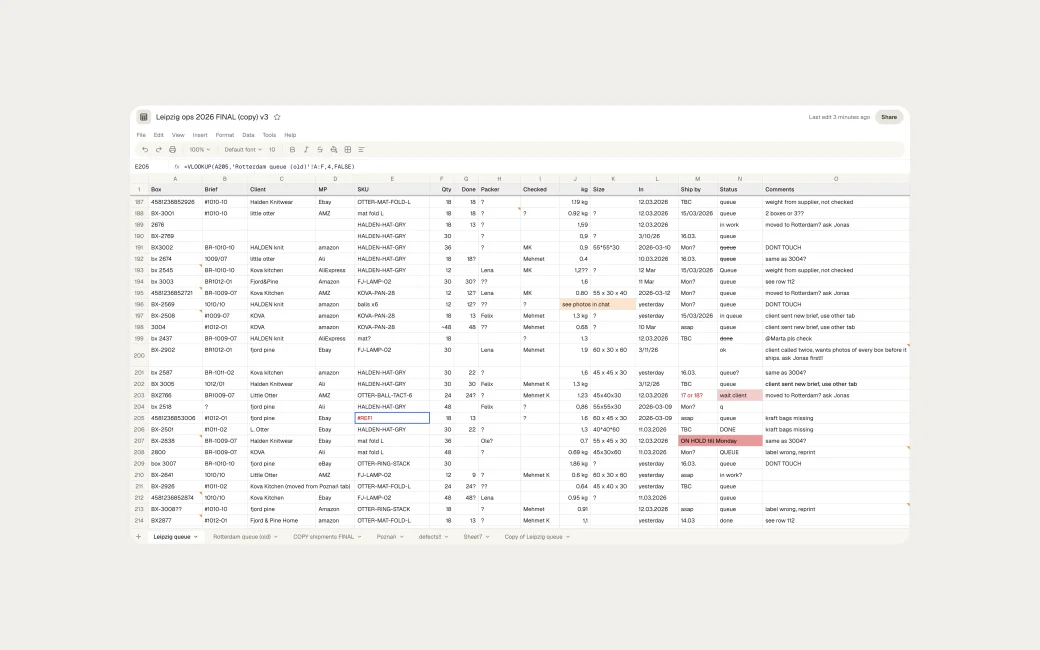
The old spreadsheet: box IDs typed several ways, question marks where the packer should be, and "queue" spelled a few different ways.
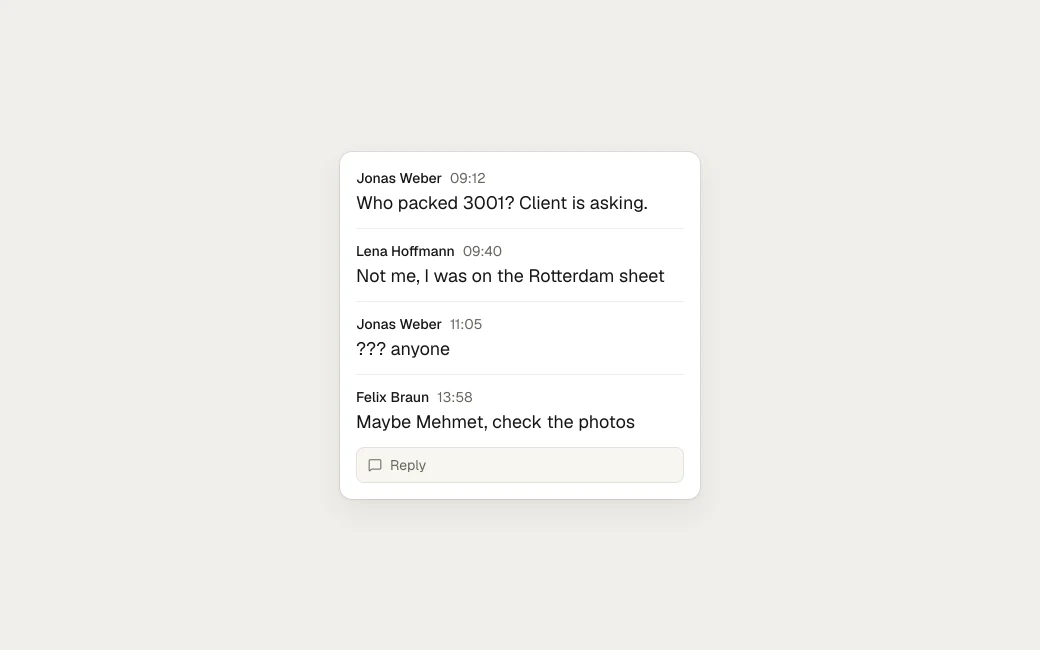
A comment thread on the sheet: "Who packed 3001? Client is asking." Three replies over the day, and nobody knows: "Maybe Mehmet, check the photos."

From sheet to system

Every box gets one ID and one place on the floor.
Type card: "One queue. Typed nineteen different ways."

Started on the floor

Before Figma, we worked on the warehouse floor and mapped every step a box takes, and who takes it.
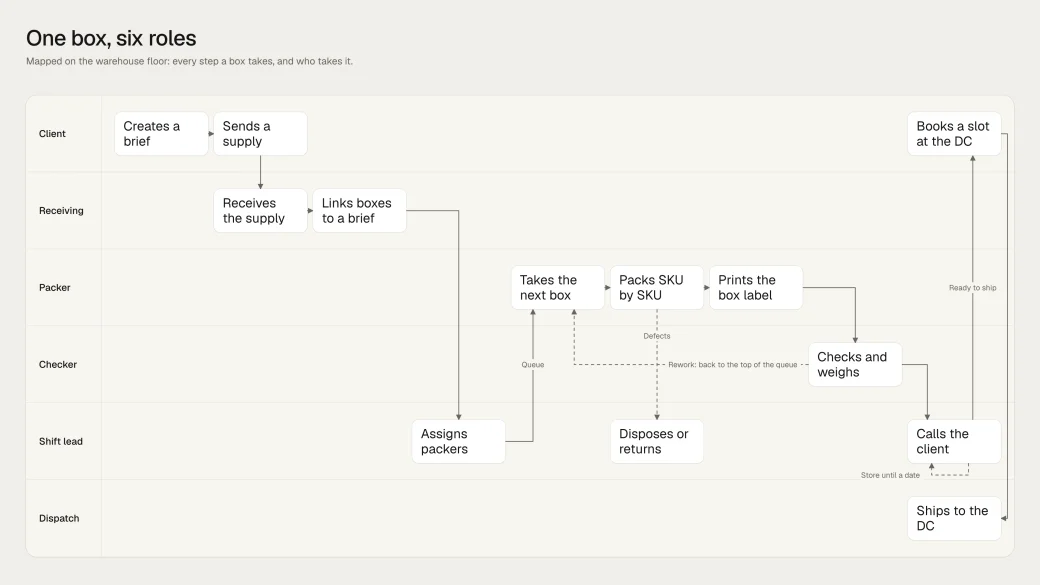
The process map from the floor: every step a box takes, from the client's brief to dispatch, in six swimlanes, one per role.

One next task

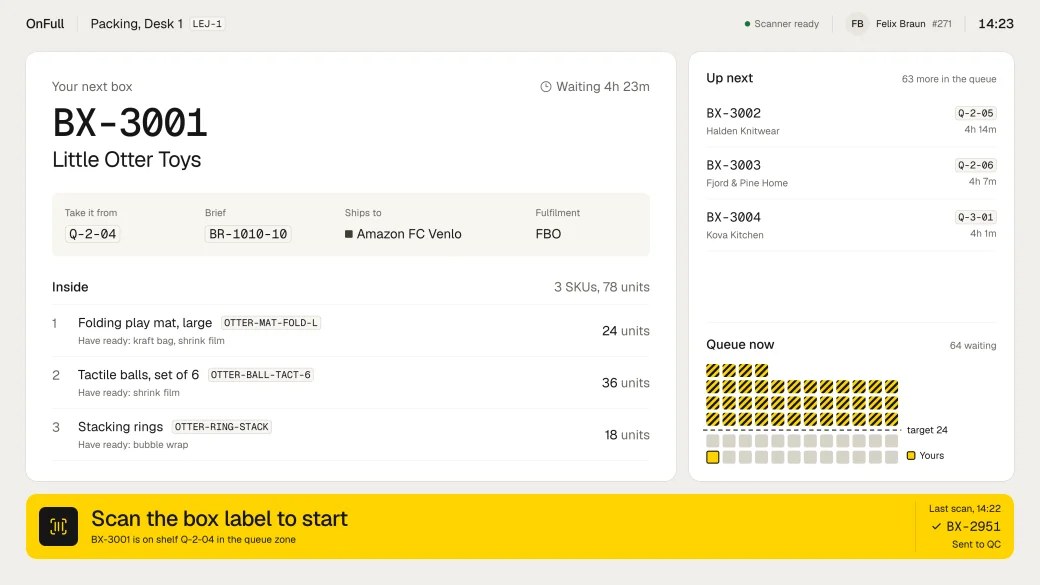
A packer sees only the next box and what to do with it. Every unit is counted by a scan, not by hand.
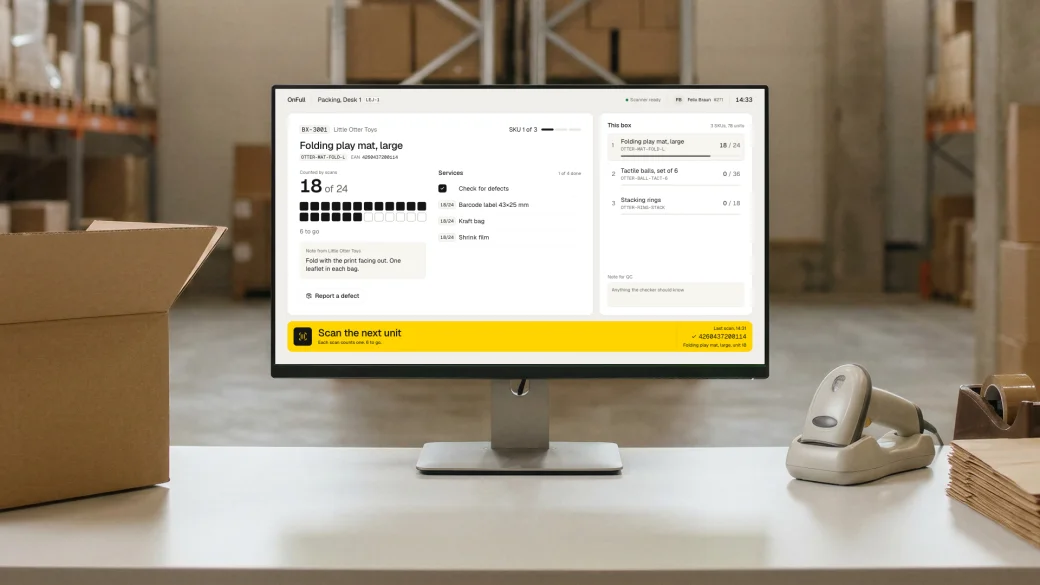
The packing desk: the station monitor shows 18 of 24 units counted.
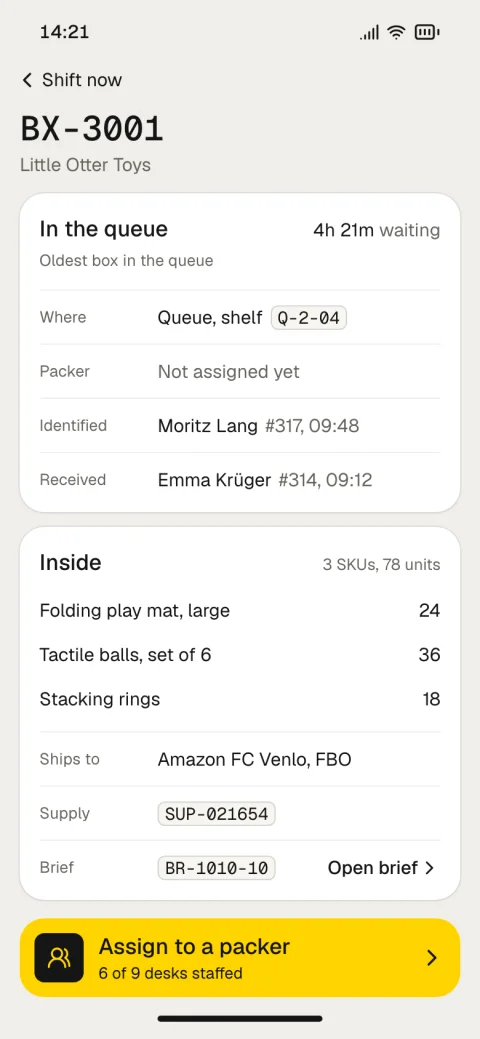
The packer's screen: the next box, BX-3001, which shelf to take it from and what is inside, the boxes up next, the queue, and a yellow bar: scan the box label to start.
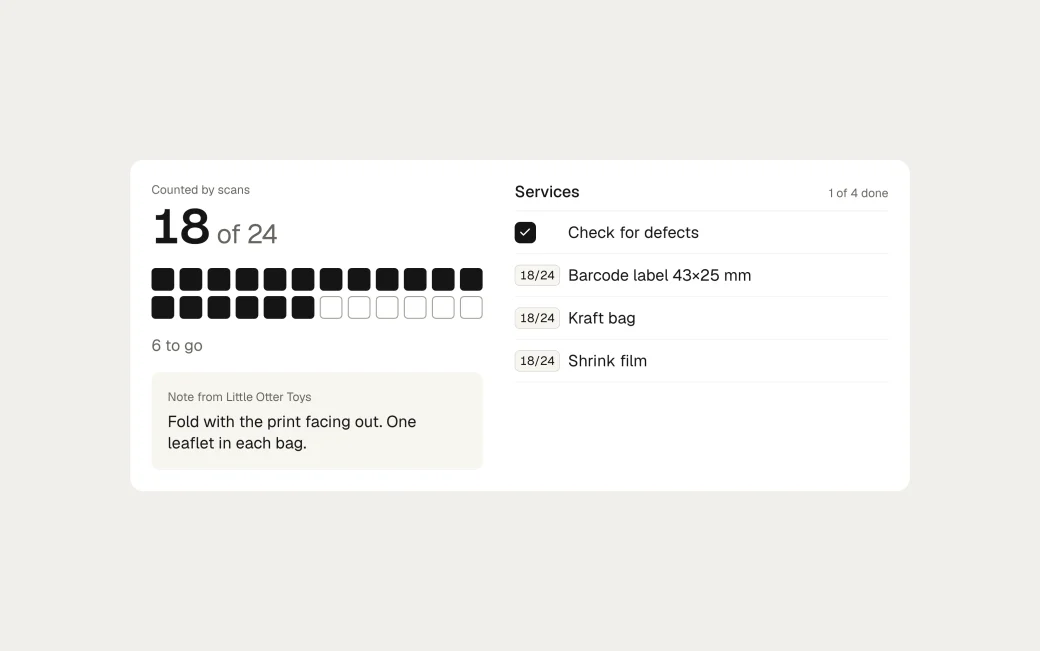
The unit counter: 18 of 24 counted by scans, one cell per unit, 6 to go, and the services for each unit, 1 of 4 done.
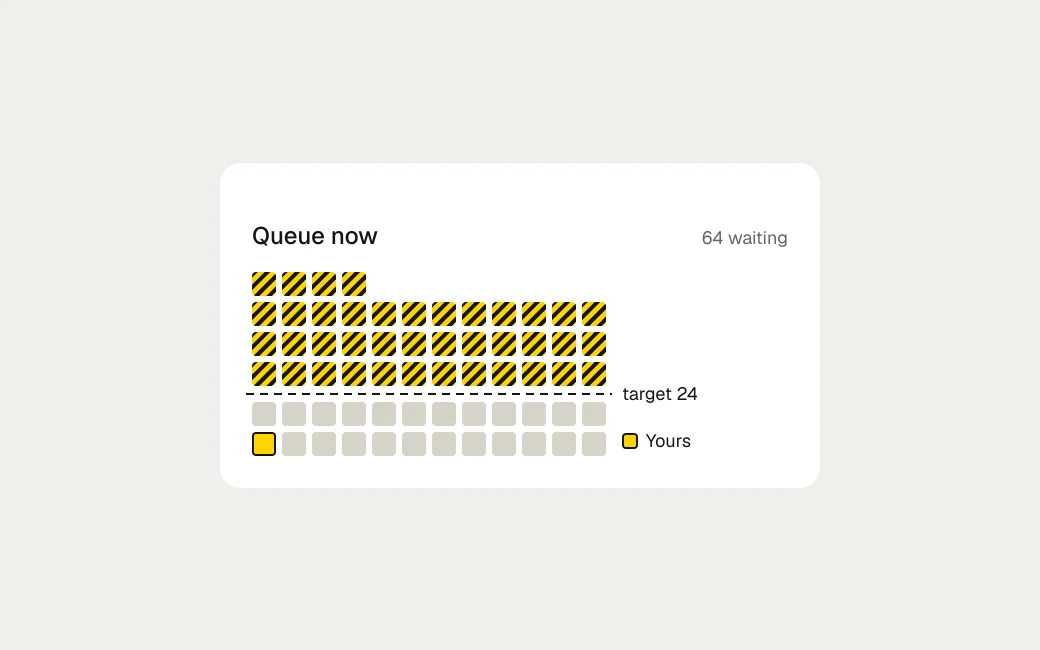
Queue now on the packer's screen: 64 boxes waiting, the ones over the target of 24 taped yellow and black, and one yellow cell marked yours.

Bottlenecks, live

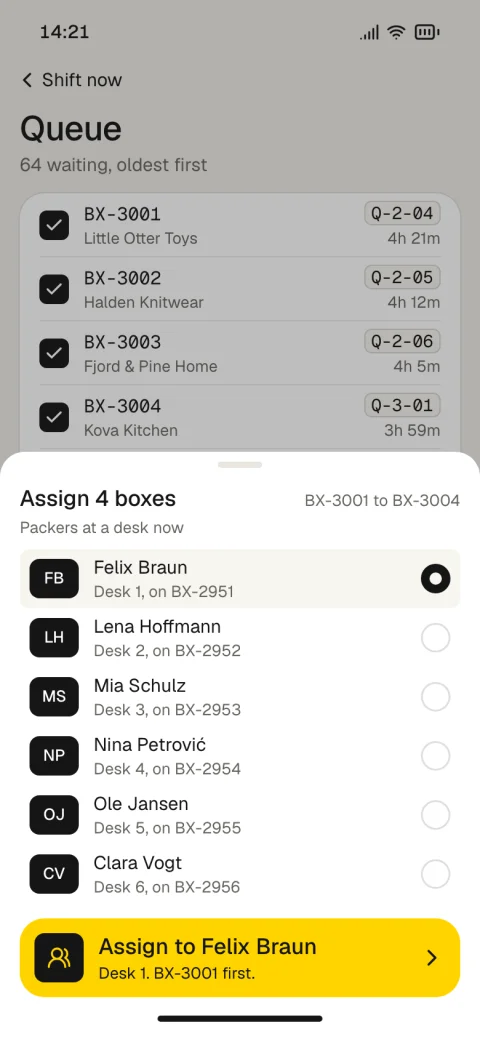
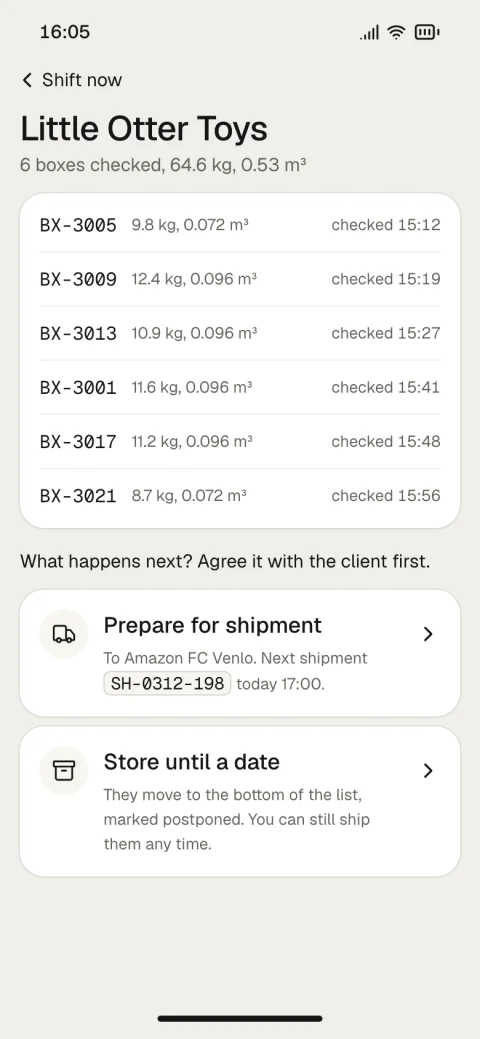
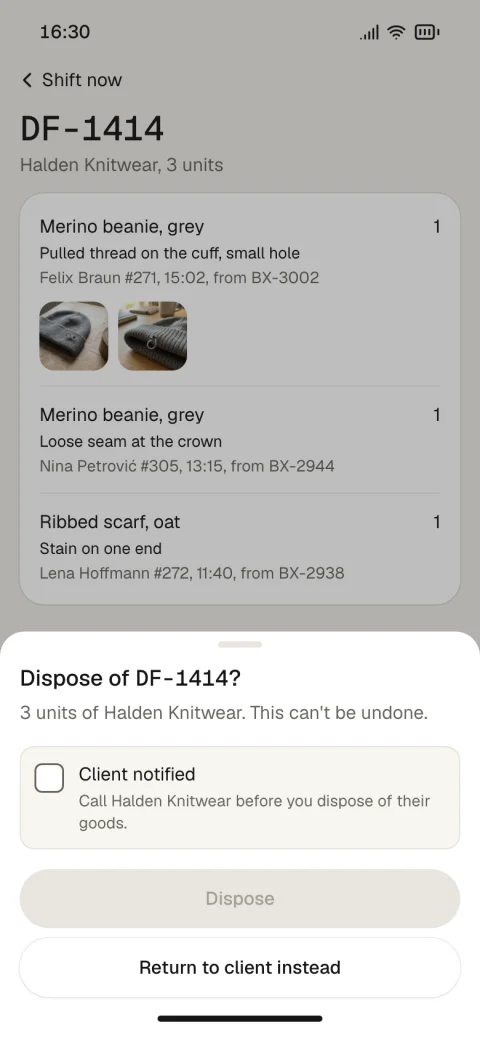
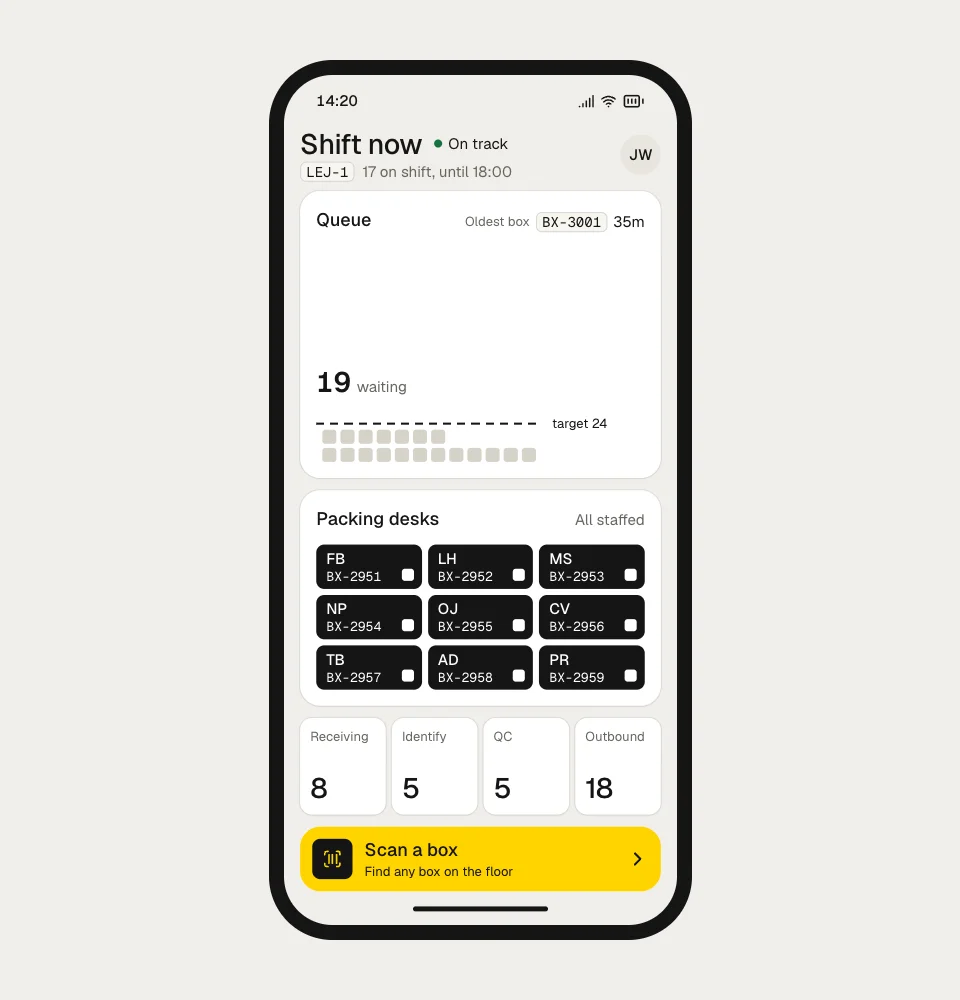
The office sees every warehouse and where work gets stuck, as it happens. The shift lead sees the same floor on a phone, with one action to take.
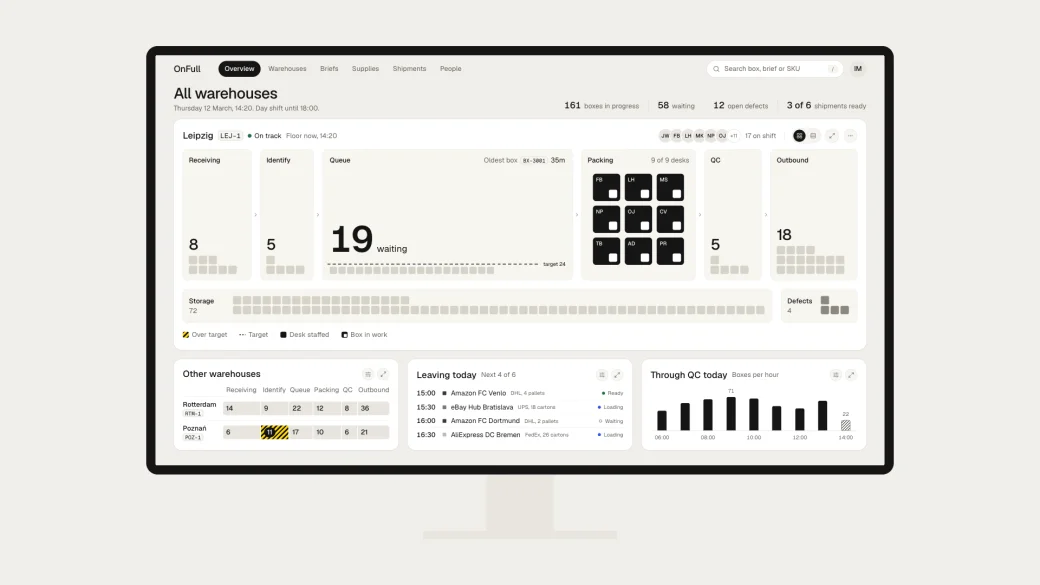
The manager's dashboard in a monitor: Leipzig on track, 19 boxes in the queue.
The shift lead's phone, on track: 19 boxes in the queue under the target line.
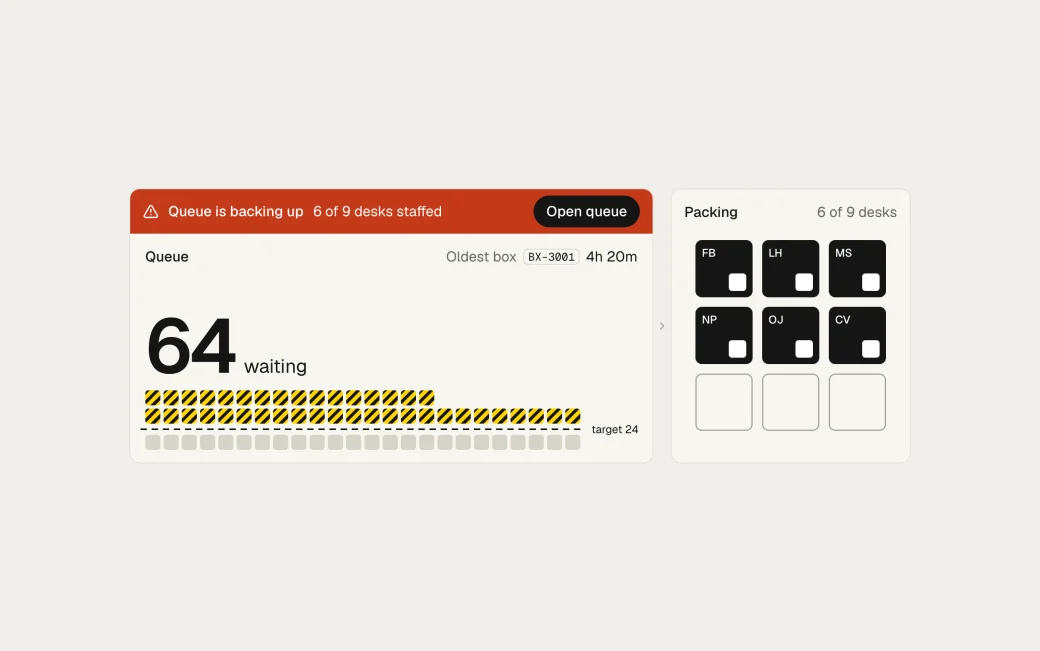
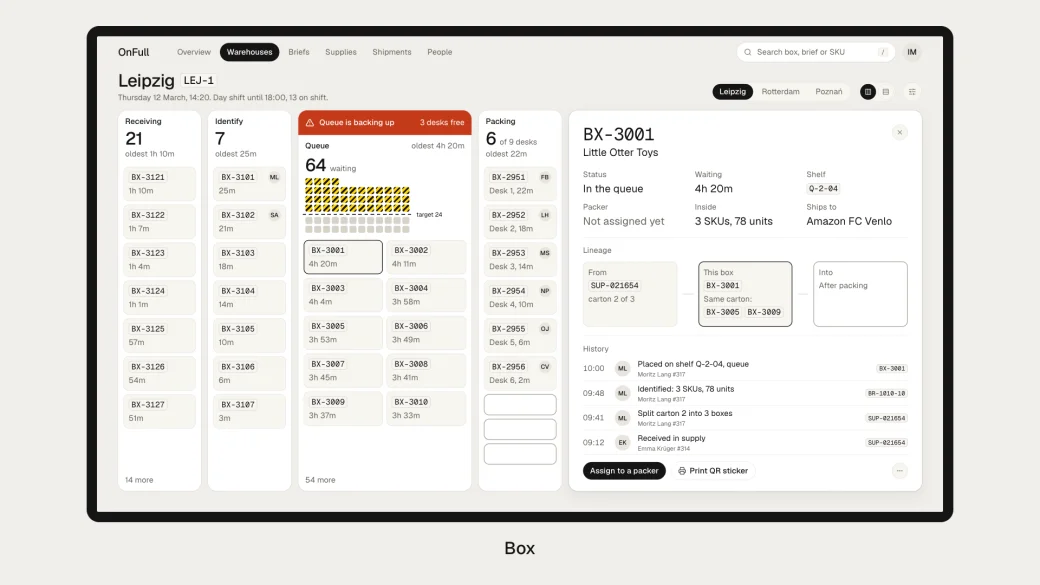
The queue on the floor view: 64 boxes waiting under a red band, the ones over the target line taped yellow and black, next to the packing desks, six of nine staffed.

Access lives on the role

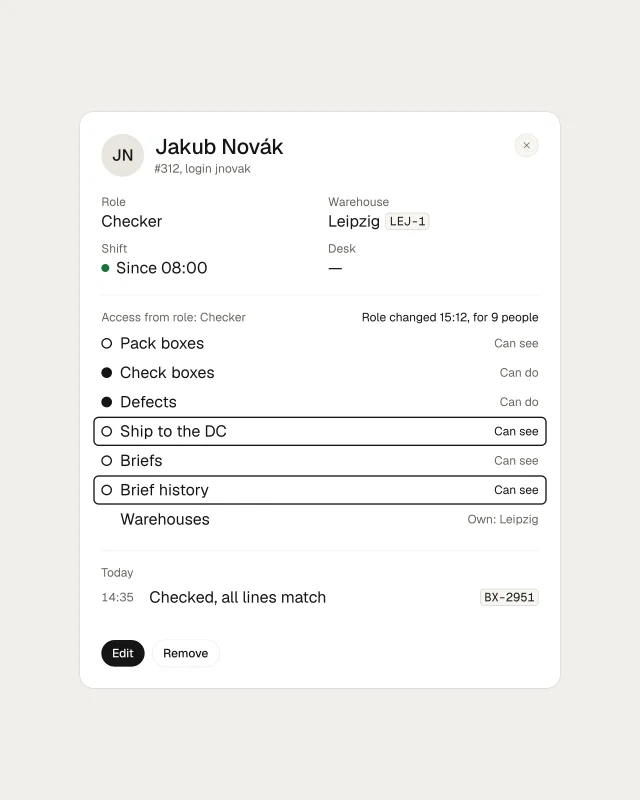
Everyone signs in as themselves, and access comes from their role. No more copies of the sheet: change a role once, and everyone in it gets the change.
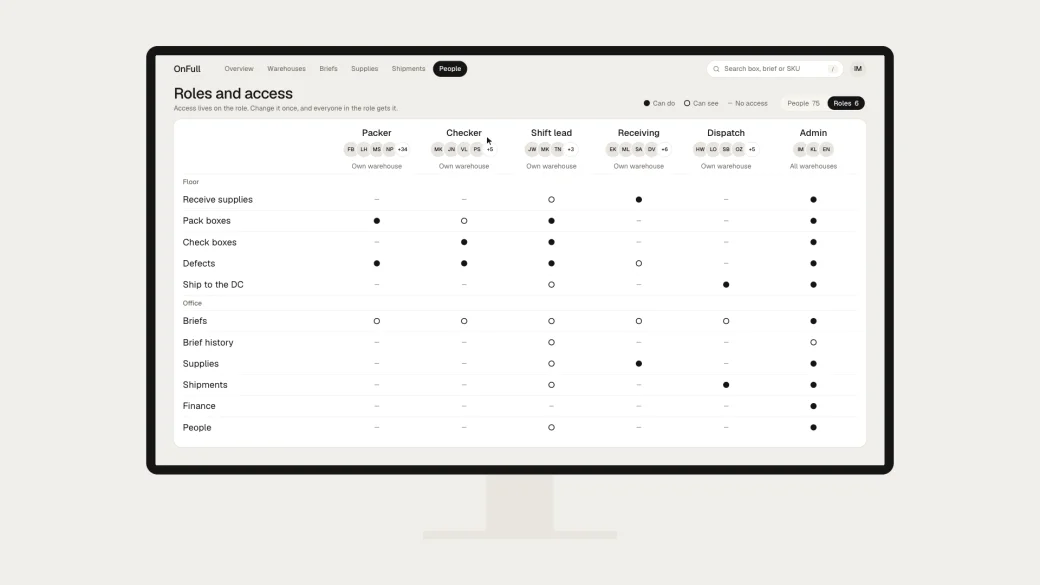
Roles and access in a monitor: six roles and what each can see and do.
A checker's profile right after the Checker role changed: access comes from the role, and the two new rights are outlined: the role changed at 15:12, for 9 people.

The floor language

Borrowed from the markings on the warehouse floor: tape means over target, yellow means it's your move.
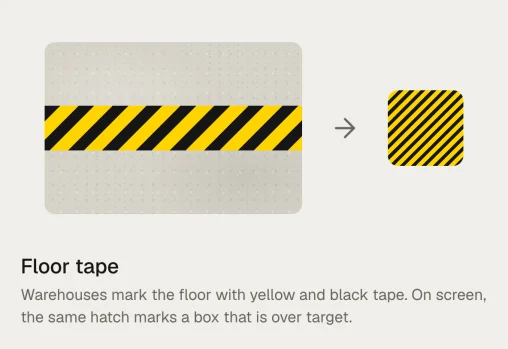
Floor tape: warehouses mark the floor with yellow and black tape; on screen, the same hatch marks a box that is over target.
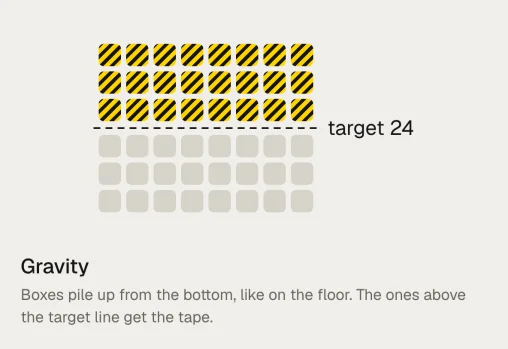
Gravity: boxes pile up from the bottom, like on the floor; the ones above the target line get the tape.
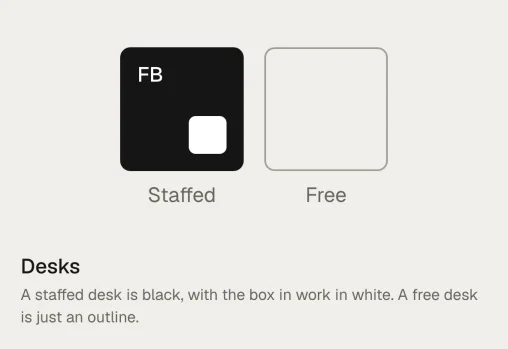
Desks: a staffed desk is black, with the box in work in white; a free desk is just an outline.
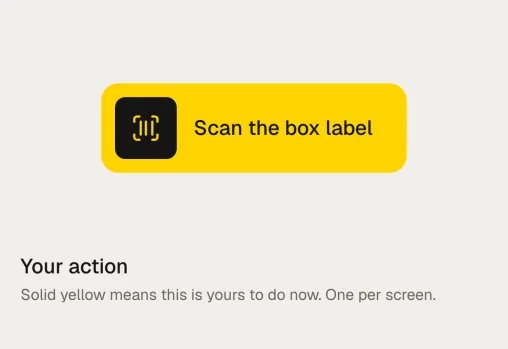
Your action: solid yellow means this is yours to do now, one per screen.
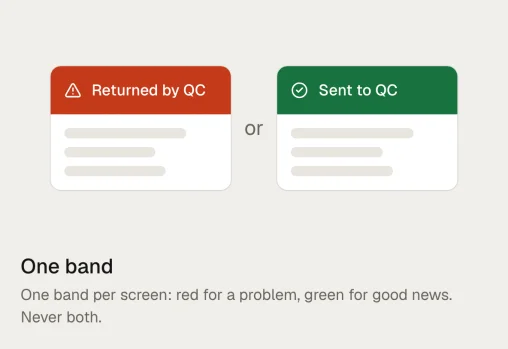
One band per screen: red for a problem, green for good news, never both.
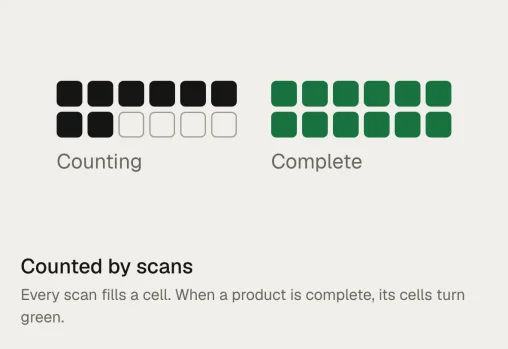
Counted by scans: every scan fills a cell; when a product is complete, its cells turn green.

Result

  • 3 warehouses off spreadsheets
  • The floor and the office on one platform
  • Rolled out in stages over about six months
  • Designed on the warehouse floor

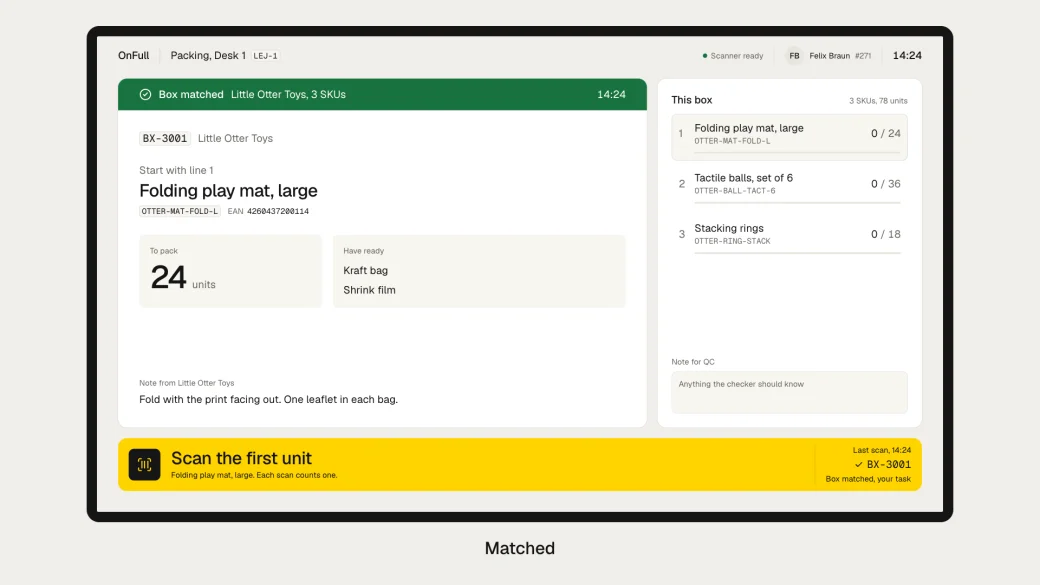
Packing desk

The packer's screen through one box, from the first scan to the scale.
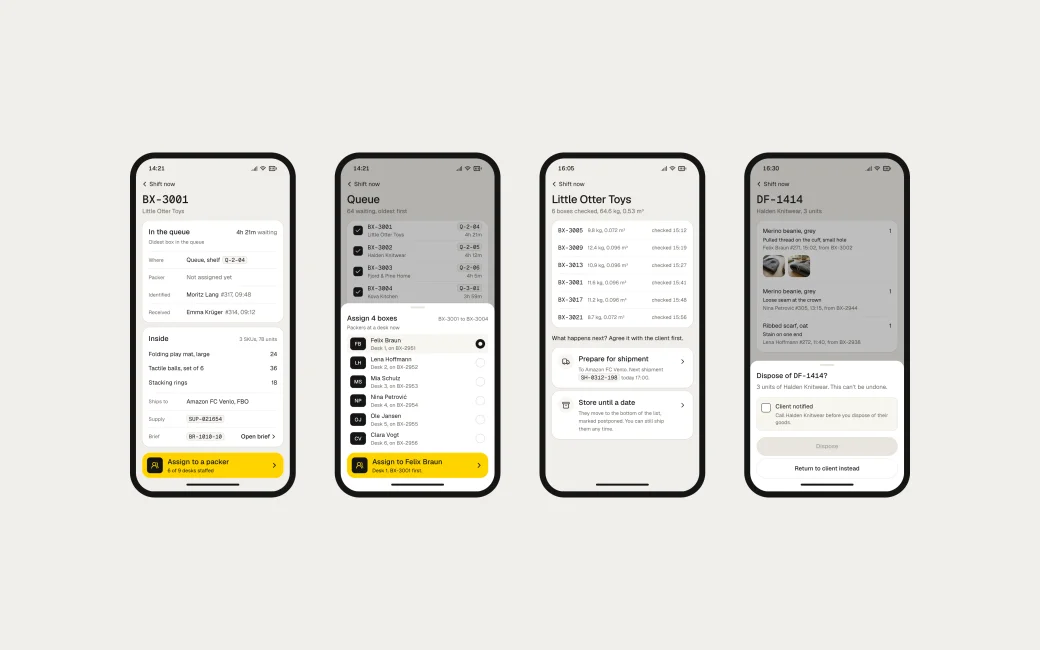
Shift lead on the floor

Scan a box, assign it to a packer, store or ship it, close a defect box.
The office

The manager's board, one box's history, people and their roles.